Showing posts with label vaccines. Show all posts

Wednesday, March 24, 2010

MMR

Unfortunately for my sister, today happens to be a vaccine post day. She finds my blog a complete drag when I post about stuff like this. But have no fear, Amanda! I have included a few pictures of Zachariah to make this a little more interesting for you and the rest of you who may doze off during this rather lengthy post. Your welcome.

Ok, so over the past couple days I have been reading up on the MMR vaccine and the diseases themselves. I was quite shocked to find out that the diseases are NOT very serious at all. The way people stress getting the MMR shot you would think that there are deaths every day from the measles, mumps or rubella. But shock of all shocks, that isn't the case. Below I have listed out some facts about each disease that doctor Sears shares with us in his book.


Look, the first picture! This giraffe is one that he received when he was still in my tummy. He has some control issues, so he loves that he can control when the music comes on by pulling it.
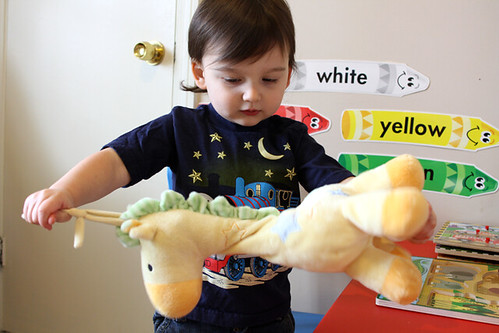
Gotta start the post out right. Now that you have had your first dose of cuteness, lets move on to the interesting stuff.


***Disclaimer: The information about vaccines in this post came from The Vaccine Book by Robert Sears. I am in the process of reading the book and I am simply sharing as I learn. I strongly recommend doing your own research before deciding if vaccines are right for your child.***


Measles:
Is a virus that travels throughout the body and causes a fever, rash, runny nose, and cough. Transmitted like the common cold and infection usually creates lifelong immunity.

Is not common anymore. In the early part of the twentieth century there were about a million cases every year in the United States. Now there are only about 50 to 100 cases each year.

Is no longer considered endemic in the United States (constantly present in a specific population or area at considerable levels). It now occurs only as isolated outbreaks.

Usually not serious. Most cases (especially in children) pass in a week or so without any trouble. However, approx. 1 in 1000 cases is fatal.

It can infect various internal organs and cause a number of complications. There are all extremely rare. The possible complications from measles, mumps, or rubella are very similar to the side effects of the vaccines themselves. Rarely, measles can infect the brain and cause brain damage.

Is not treatable. The illness must run its course. If a child becomes seriously ill and is hospitalized, high-dose vitamin A therapy can be used to lessen the duration and severity of the disease.


Mumps:
Is a virus very similar to measles. Causes fever, rash, and swelling of the saliva glands in the cheeks. The swelling of the cheeks is usually the most telling sign of mumps, and a blood test can be done to confirm the diagnosis.

Is not common. Only 250 cases have been reported each year throughout the last decade in the United States. In the early twentieth century there were several hundred thousand cases each year.

Is not serious. Most kid who have mumps have some fever and a slight rash but not enough for anyone to worry about or even make a diagnosis. For teens and adults mumps can be more serious. Males may have sore, swollen testicles, and me or women can have arthritis, kidney problems, heart problems, or nervous system dysfunction. Very rarely, the disease can make adults (both men and women) sterile.

Is not treatable. Like the measles, it must run its course.


Rubella:
Like measles and mumps, rubella is a virus that causes a fever and rash. It can also cause aching joints and swelling of the glands behind the ears and in the neck. The disease is so mild in children that it often goes unnoticed. A blood test can confirm the diagnosis. It is transmitted like the common cold and a person catches rubella only once in a lifetime.

Vaccines for rubella are given to protect pregnant women. If a pregnant woman catches rubella (she would be susceptible if she'd never had the disease or if the rubella vaccine she got as a child had worn off), it can infect her fetus and cause birth defects. So the vaccine is mainly given to protect teachers and mothers and their soon-to-be-born babies. Rubella is most risky to a fetus during the first trimester.

Rubella is not common. There used to be 100,000 cases a year, but with universal vaccination it decreased to about 250 cases each year. In the past few years only about 20 cases have been reported each year in the United States.

** Interesting fact: Over the past two decades, about 10 babies have been born with CRS (congenital rubella syndrome) each year. In the past few years, this has declined to only about three babies each year. In 1990 there was an unexplained jump in rubella to 1125 reported cases. This resulted in 34 babies born with rubella birth defects each year for the next two years. (Doctor Sears explains this in the book to illustrate what could happen if rubella came back as a common disease.)

Rubella is not serious. Its virtually unrecognizable in children, and usually harmless for adults. It is not a fatal disease. However, some of the birth defects in a fetus are permanent (hearing loss, heart, eye, and brain defects, and growth problems). Rubella can also cause stillbirth.

No treatment is given to infected people. The virus just has to run its course.


Is everyone still awake? Good. Now, you may take a brief brake and look at this picture of my son giving his elephant a kiss. (This elephant was given to him at the hospital by three of my friends from highschool!)
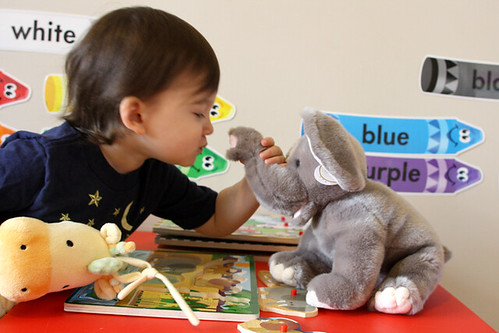


And now you can see a picture of Zachariah making his giraffe give his elephant a kiss.

Fun, huh? Ok, break over! Now onto the second part of this post.


The MMR Vaccine:
It is given at twelve or fifteen months old, with a booster dose at five years.

It is a live virus vaccine. The viruses in the vaccine are whole and living.

Includes the following ingredients in the final vaccine solution:
  • The three viruses
  • Saline solution, sugars, and gelatin
  • Human albumin (blood proteins)
  • Residual cow fetus serum
  • Neomycin (an antibiotic)
  • Traces of chick embryo proteins
  • "Other buffer and media ingredients" (details are not listed in the product insert)

It causes common reactions (general aches, milk rash and fever) to about one in twenty children. The book has a very long list of other rare complications. For fear of putting you all to sleep, I will not be listing those out. :)

There are some VERY controversial ingredients involved in the making of this vaccine. If I try to paraphrase what Dr. Sears explained in the book I will end up just confusing everyone. So I am going to just type it all out word for word. That way if you are confused it is Dr. Sears' fault, not mine. :)


"Hold onto your seats. This may be the most complicated manufacturing process so far.

I could not determine where the measles and mumps viruses originally came from, but they probably came from infected individuals many decades ago. The rubella virus was originally taken from an infected aborted fetus in the 1960's.

The measles and mumps viruses are nourished for years in a culture of chicken embryo cells. The rubella virus is nourished in a culture of human lung cells. Each of these tissue cultures is contained in a solution of saline, amino acids, vitamins, serum from a cow fetus, sugar, gelatin, neomycin (an antibiotic), and finally, human albumin (a protein filtered out of donated human blood units).

The cell cultures, cow fetus serum, and human blood proteins are tested to make sure no errant infectious germs are present. Then the three viruses are removed from the cultures in batches and put into the vaccine solution. They are alive but weakened so they won't (usually) cause an actual infection when injected.

Why is the process so complicated? The numerous nutrients are needed to keep the chicken embryo cells and human lung cells alive so that the viruses can keep using the cells to multiply."

Did you all catch the whole thing about the rubella virus being taken from an infected ABORTED FETUS? Um... yeah.


Reasons to get this vaccine:
Measles is a disease with some possibly serious side effects and its fatality rate is something to consider (about 1 in 1000 cases). Rubella, while harmless to children and adults, can cause birth defects or stillbirth. Vaccinating children limits the exposure to pregnant women.


Reasons some people choose not to get this vaccine:
Measles is now extremely rare and in most cases harmless. The chance that a child will catch measles and be one of the rare fatalities is extremely low. Mumps and rubella are mild diseases in children, and both are rare. Some parents don't worry about vaccinating for diseases that are both mild and rare.

The main reason some parents worry about this vaccine is that the potential side effects, although rare, can be considerable when they do occur. The human and cow blood products used in manufacturing may also concern some parents. (Um, I would definitely be one of those parents.)


Closing paragraph from Doctor Sears:

Although there are three diseases involved in this vaccine, parents do have the option to get each component separately, so it makes sense to consider each disease individually. Measles can be serious at any age, but it usually isn't and its very rare. Mumps is serious mainly after childhood, and its a little more common than measles. Rubella is a completely harmless to disease to children and adults alike, but it would cause more and more birth defects if allowed to escalate in our country.

While each disease is very different, the separate vaccines are quite similar. The unusual manufacturing process and potential side effects (though very rare) of each vaccine understandably give some parents pause. Given the bad press for the MMR vaccine in recent years, I'm not surprised when a family, especially one with a history of autoimmune or neurologic disease or with one autistic child already, tells me they don't want the MMR or at least want to split it up or delay it. Since the fatality or complication rates for these childhood diseases are fairly low, I don't have much ammunition with which to try to change these parents' minds. I do point out that the mumps can be serious when their kids grow up, and rubella may be an issue for their older daughters someday, and I urge them to do blood testing to determine the need for these shots later on. I also warn them not to share their fears with their neighbors, because if too many people avoid the MMR, we'll likely see the diseases increase significantly."


My opinion:
Oh boy. Where do I even start? The ingredient list horrifies me. The side effects make me nervous. The link between MMR and autism scares me (which Dr. Sears touches on in the book, but not much.). This has been a long post, so I wont ramble on for too long. But I will say that after reading this chapter I am SO glad I decided to not let Zachariah get this vaccine at the age they wanted to give it. I probably wont allow him to have this vaccine until he is about to go to school. I am very glad I did not listen to other people when making my choice about Zachariah receiving the MMR. I am thankful that I listened to my "mommy gut".

And for the record, I will be doing a separate post on the dangers of animal and human tissues/blood in our vaccines. It is definitely cause for concern. *gag*


Friday, March 12, 2010

Polio Virus and Vaccine

Ok, at this point I am tired and have spent way to long typing this post, so I am not going to worry about a friendly/entertaining intro and I am just going to jump on in. Is that ok with everyone? Good.

As usual, if you need a refresher or you missed a previous week, click on the links below.
Introduction
HIB
PC
DTaP
Hep B
Rotavirus

***Disclaimer: The information about vaccines in this post came from
The Vaccine Book by Robert Sears. I am in the process of reading the book and I am simply sharing as I learn. I strongly recommend doing your own research before deciding if vaccines are right for your child.***


Polio is a virus that is transmitted like the common cold or an intestinal flu. Most cases don’t show any symptoms, but some people have a minor sore throat and fever. One in every 250 cases develops muscle weakness and paralysis. Polio can be caught only once in a lifetime.

Polio…

- is not common. There haven’t been any cases in the US since 1985 (that was the year I was born. FYI.) when an immigrant came in with the disease. No U.S residing citizen has contracted wild polio since 1979. The last case of wild polio in the entire Western Hemisphere was in 1991.

- can be serious. Most cases are harmless, but unfortunately some individuals become paralyzed. It is usually temporary, but two thirds of them suffer permanent muscle weakness. Most often it is not fatal.

- is not treatable. The person is supported with breathing machines in an ICU for several weeks until the paralysis wears off.


Interesting fact: In 2005 an Amish person from Minnesota got an oral live-virus polio vaccine overseas. (that live-virus vaccine is no longer given in the US) The live polio virus from the vaccine then spread from that person to a few unvaccinated children within that Amish community. Since these cases were caused by the vaccine and did not occur naturally, the United States is still considered polio free since 1985.


Polio Vaccine…
- given at 2 months, 4 months, 18 months and 5 years. (Just in case you were wondering, Zachariah has had two of these doses.)
- is an injected vaccine. It has been around for many decades.
- cannot cause paralysis. That was true of the old vaccine, which was given as a live-virus liquid by mouth. Thankfully, that was taken off the U.S. market in the early 2000s. Now we only use the injected, inactivated form, so there are no longer any paralytic reactions to the vaccine.
- has one of the safest side effect profiles of all vaccines. The standard side effects occur, and the only unusual reaction that has been reported is Guillain-Barre syndrome, which has been reported after various vaccines.
- has the following controversial ingredients:
- Baby cow blood serum
- Human albumin (blood proteins). This is also in the vaccine solution
- Glutamate. Which is a component of MSG.
- Formaldehyde and 2-phenoxyethanol. These two chemicals do have some toxicity when used in high amounts.
- Monkey kidney cells. This is probably the most controversial. (Hmm. I wonder why?)


Reasons to get this vaccine:
Universal vaccination against polio has eliminated this disease from North America, Europe, south America, Australia and Antarctica. Until polio is eliminated from the whole world, there is always a chance that polio could take hold in our country again if people do not receive this vaccine. Also, some people worry about immigrants bringing in polio (although this hasn't happened in twenty five years), so they feel better if their child gets vaccinated.


Reasons why some people choose not to get this vaccine:
The use of monkey kidney cells, cow serum, and human blood proteins gives some parents reason for concern. Since polio doesn't exist in our country, some parents feel safe about skipping this vaccine. The chance that an unvaccinated child will catch polio while living in the US is very close to zero. Some parents do want to give their child the vaccine, but they worry about adding this shot to the massive list that are given to newborns, so they choose to vaccinate their kids as they get older.


Closing paragraph from Doctor Sears:
Since polio was eradicated from the United States more than twenty years ago and isn't even found on this half of the planet, it is safe to say that we don't give this vaccine in order to protect each individual child from catching polio. Rather, we do it to protect our nation as a whole in the event an outbreak does occur. Although the ingredients may seem a little odd, we don't see many side effects from this shot. If we stop using this vaccine, polio may come back. Anyone who is over fifty knows just how scary that would be. For younger people, polio might not seem like a reality. When parents tell me they want to skip the polio shot for their child, I tell them, "Okay. Your child is almost guaranteed not to catch polio. You better just pray that not too many of your neighbors make the same choice, or in ten years we may all be in trouble." While I realize some parents think it isn't critical for infants to receive the polio vaccine during the early years (compared with the vaccines for diseases like pertussis and meningitis), I consider this vaccine very important from a public health viewpoint. Until the whole world is polio free, ongoing vaccination will help keep our nation protected.

My opinion:
The more I research these vaccines, the more I realize that I am NOT horribly opposed to all of them. I just think it is a very bad idea to inject all of these shots into such a young baby. That being said, I do not think this is a "must" vaccine. I do think it probably would be good for my kids to receive this vaccine at some point though. If for no other reason than to make sure polio does not come back into the United States. The ingredients are gross, and I am not a fan of freaking formaldehyde being in so many of these vaccines, but the older my kids get the less worried I will be about the effects they may suffer from these psycho ingredients. So yeah. I am not opposed to this vaccine as long as my kids are out of the baby/toddler stage when they get it.


Thanks for coming back and reading what I have been learning! Next week I will be reading/blogging about the controversial MMR vaccine. I'm not gonna lie. I am pretty dang pumped about researching this one. :)

Have a great weekend everyone!

Wednesday, March 03, 2010

Rotavirus Disease and Vaccine

Hello there! I am back again with another installment of "Things I Have Learned While Reading The Vaccine Book". This week we will be learning about the rotavirus disease and vaccine. Hold onto your hats, because this week there are some very weird/controversial ingredients involved in the making of this vaccine!

***Disclaimer: The information about vaccines in this post came from
The Vaccine Book by Robert Sears. I am in the process of reading the book and I am simply sharing as I learn. I strongly recommend doing your own research before deciding if vaccines are right for your child.***

Rotavirus is an intestinal virus that causes vomiting and diarrhea. An infant typically stays contagious for two to three weeks after symptoms begin.


Rotavirus
- is transmitted by contact with the stools or saliva of an infected person. (Um… gross.)
- is resistant to common disinfectants and antibacterial hand soaps. It takes a strong antiseptic or alcohol solution to kill the germ.
- is indistinguishable from the common stomach flu in the initial stages of the illness (fever, vomiting, diarrhea).
- can be caught more than once, but infections are usually milder the second (or third) time around.
- is very common. About 2 million people (mostly infants and children) are hospitalized each year worldwide for this disease. It peaks in the US during the late fall and winter.
- is the most common cause of severe diarrhea in kids under the age of two. By the age three, most kids will have caught rotavirus at least once.
- may cause severe dehydration due to the persistent diarrhea and vomiting.
- is most severe in the first year of life.
- is not treatable. There is no medication to combat rotavirus. Infants who are not significantly dehydrated usually do fine at home with the proper hydration measures.


The vaccine…
- is given at 2 months, 4 months and 6 months.
- is given as a liquid by mouth. It is currently the only oral vaccine in the vaccine schedule.


RotaTeq (Merk) uses the following method to make the vaccine: Five different strands of rotavirus that were originally taken from infected humans and infected cows are used. The viruses are “cross-bred” genetically to increase their effectiveness for the vaccine. The viruses are then grown in a mix of monkey kidney cells nourished by fetal cow serum (blood from a cow fetus). Batches of the virus are filtered out from these cells and placed in a liquid solution. Then your kid drinks it.

Excuse me. Am I the only one appalled that is ok to use freaking MONKEY KIDNEY CELLS and BLOOD FROM A COW FETUS in our child’s ORAL vaccine? Excuse me while I go vomit.

*deep breath* Moving on...

The viruses are whole and live when administered to patience. They are intended to multiply in the intestines of infants in order to create a mild infection that the body’s immune system responds to so it can fight off the real infection if it ever hits.

Controversial ingredients include: monkey kidney cells, fetal cow blood, polysorbate and the use of live, genetically altered organisms.


Reasons to get this vaccine:
(in exact words of Doctor Sears)
Besides the flu, this is the most common of all the vaccine preventable diseases right now. Since most children catch this illness during their first few years of life, its not a question of if your child will catch it, it’s a matter of when will he catch it and how severe will it be. Getting this vaccine will decrease your child’s chance of catching the disease. This can be a very serious disease for infants during the first year of life. The vaccine decreases the severity of the illness when it does strike.

Infants in day care are at high risk of catching this illness. Formula fed infants are likely to suffer a more severe case.

Reasons why some people choose not to get this vaccine:
The animal products in this vaccine may worry some parents. (Ya think?) Also, a new brand of the vaccine has come out a couple years ago and some parents may want to wait until all of the side effects are known. Infants who are breastfed and not in daycare have a fairly low risk of catching this disease during the first year of life, so some parents may choose to skip this vaccine.


Closing paragraph from Doctor Sears:
This infection can be a real pain in the… diaper area. It is extremely common. During my training years, I remember the hospital hallways would be overflowing with dehydrated babies and worried parents because of this bug. Fortunately the actual number of fatalities is low in the United States. Perhaps twenty years from now we’ll look back and say, “Remember the old days, when rotavirus was around?” Sure, the vaccine is new and the ingredients are a little odd, and this might give some parents pause. But this vaccine should help us get rid of rotavirus. I consider this a fairly important vaccine.

My opinion:
I think the ingredients are horrific. But I would be a complete paranoid mess if Zachariah were to get severely dehydrated. Since the rotavirus can cause severe dehydration, I do think that I am ok with this vaccine. I don't think this is a must have vaccine, but if I can get past the animal parts I think I will be ok with it.

Though, I am now wondering if Zachariah ever received it. I know he NEVER received any oral meds in the doctors office. Does anyone know if there is a new vaccine that is not given orally? I am very curious.

Stay tuned next week for a post on Polio disease and vaccine!

Oh, and if you have missed any of the previous posts...
Introduction
HIB
PC
DTaP
Hep B

Friday, February 26, 2010

Standard Side Effects of Vaccines

In his book, Doctor Sears has a list of common reactions that can occur with virtually every vaccine. He calls them "standard side effects" because they tend to occur about 5 to 10 percent of the time for most shots. Some of the vaccines cause these reactions as much as 40 percent of the time. I have decided to list them out for you, just in case you were curious as to what they were.

Your welcome.

According to Doctor Sears, the side effects are usually harmless in the long run and the short run. The include, but are not limited to:

- Pain, redness and swelling at the injection site
- Fever
- Crying
- Vomiting
- Diarrhea
- Poor appetite
- Sleepiness
- Headaches
- Body aches
- Pea-sized nodule at injection site lasting for several weeks
- Rash over the whole body or limited to one area

From what Doctor Sears says, these side effects can usually be minimized by holding a cool washcloth or ice pack to the injection site and giving ibuprofen.

That's all I have for you today. I hope everyone has a great weekend! And don't forget to come back next week for a post on the rotavirus disease and vaccine. :)

Sunday, February 21, 2010

Hep B

I know it has been a couple weeks, but I am finally back with another vaccine post. Sorry for the delay. The great snow blizzard of 2010 distracted me. :) Ok, so here we go! If you have missed the other vaccine posts, feel free to click on one or all of the links below.
Introduction
HIB
PC
DTaP


***Disclaimer: The information about vaccines in this post came from The Vaccine Book by Robert Sears. I am in the process of reading the book and I am simply sharing as I learn. I strongly recommend doing your own research before deciding if vaccines are right for your child.***


Hep B is a sexually transmitted virus that causes liver damage and sometimes liver failure. It can be transmitted through unprotected sex, it can be passed on by the sharing of IV drug needles, the use of improperly sterilized tattoo needles, or an accidental stick with an infected needle. It can also be acquired through a blood transfusion.

Symptoms include abdominal pain, jaundice (yellow eyes and skin), vomiting, diarrhea and fatigue.


Hep B virus...

- can survive outside a person for one week (on a toothbrush, razor etc...).
- can be passed from an infected mother to her baby during the birthing process
- is diagnosed with a blood test
- is very rare in infants and children. It occurs mainly in adults.
- is extremely serious. About 90% of babies who catch hep B during birth become chronically infected. They may not show symptoms for many years or decades, but about 20% will develop liver cancer or liver failure eventually.
- is not treatable. In adults it passes without much consequence. For kids it is more likely to cause long term problems.

The vaccine...

- is given in three doses. Birth, two months and six months.
- the vaccine is given moments after birth, but the only babies who need this birth dose are those born to a mom with hep B. Most babies can safely wait until they are two months old.
(Note: Some hospitals give the hep B vaccine to babies without discussing it with the parents first. If you want to delay the shot, you need to make sure you communicate that to the hospital staff.)
- both brands of the vaccine used to contain mercury, but now they are both 100% mercury free.
- controversial ingredients include aluminum and formaldehyde.
- side effects are pretty standard (blog post on standard side effects coming soon).
- other reactions that have been reported (but are very rare) include: Severe, life-threatening allergic reactions, severe rash, heart palpitations, minor liver damage, bleeding disorders, visual problems, hair loss, arthritis, lupus, migraines, nerve dysfunction, Guillian-Barre syndrome, seizures and multiple sclerosis.

Reasons to get this vaccine:
If you are a health care or medical worker you will come in contact with other peoples blood. In this case, it is very important to get this vaccine. Newborns with hep B positive moms would benefit from this vaccine. Family members living with a hep B-positive person benefit from the vaccine. Most parents feel this vaccine is relatively safe because the manufacturing process and ingredients do not include any animal tissues.

Some people choose not to get this vaccine because some parents feel their babies and children aren't at a high risk of catching hep B. It is highly unlikely for hep B to be transmitted b casual day-to-day contact. Its main route of transmission is sexual. Another reason people tend to stay away from this vaccine is because of the reported side effects. And some parents simply decide to delay this shot while more important ones are given first.


Closing paragraph from Doctor Sears:
Even I have to admit that when it comes to the question, What diseases is a baby at risk of catching? hep B is very low on the list (unless you have one very rebellious baby). Yet, getting a whole generation of kids to grow up with the hep B protection is a good way to minimize this disease in the future teen and adult population. So, do you get the shot early, while your child is young and can't voice an opinion? Or do you wait until she's older and getting closer to really needing the vaccine? (Not your kid, of course, I'm just talking in general terms.) It's not always easy to drag a teenager to the doctor to get one shot, let alone a series of three. Overall, this is an important vaccine from a public health standpoint, but its not as critical from an individual point of view as most of the other infant vaccines.

My opinion:
My main beef with the hep B vaccine is the fact that it is given at birth. Not just at birth, but seconds after the baby is delivered. Unless the mother is hep B positive, I see NO reason for a newborn infant to receive this vaccine. It just baffles me that it is ok to inject chemicals into a perfectly healthy newborn. I do think that it is important, but I do not think it is a necessary thing at such a young age. Zachariah has received all of the recommended doses, but I will probably delay this shot with my future children.

Friday, February 05, 2010

DTaP

This is the third vaccine in my twelve part vaccine blog series. Here are the links to my previous vaccine posts in case you missed them or want to refer back.
Introduction
HIB
PC


***Disclaimer: The information about vaccines in this post came from The Vaccine Book by Robert Sears. I am in the process of reading the book and I am simply sharing as I learn. I strongly recommend doing your own research before deciding if vaccines are right for your child.***

DTaP stands for diphtheria, tetanus and pertussis. Since this vaccine covers three different diseases, this post is going to be a doozie. There was about twenty pages of info in this chapter, so I am going to try and give you the main highlights without writing 10 pages worth of stuff. Wish me luck. :)


Lets start by trying to understand a little about each individual disease, then we will cover the vaccine.


Diphtheria is a very serious throat infection that is caused by a bacterium. The germ secretes a toxin that irritates the lining of the throat and upper lungs, causing severe coughing and breathing difficulty. The breathing passage becomes swollen and may close off all together.


Things you should know about diphtheria:

- It is transmitted like the common cold.

- It is not very common. There has been a maximum of only five cases reported each year. Many years go by without any reported cases.

- It is a serious disease. About 10% of the cases are fatal.

- It is treatable. An antioxin is given through an IV and antibiotics are given to kill the germ.


Tetanus is an acute infectious disease that is caused by a bacterium that lives in soil and on dirty, rusty metal and can also contaminate unsterile needles. Once introduced to a deep dirty wound (or through a needle), the germs multiply and secrete a toxin that enters a persons nerves and causes paralysis throughout the entire body.

Things you should know about tetanus:

- It is not common. There are 50 to 100 cases a year. All occur in adults over 25 who didn't receive a booster shot.

- It is a serious disease. 15% of the cases are fatal.

- It is kind of treatable (if that makes any sense at all). Antibiotics can be given to help eliminate the germ, but there is no medication that will reverse the paralyzing toxin. It just has to run its course. A person needs intensive care and life support while the paralysis wears off.


Pertussis (aka: whooping cough) is a bacterium that infects the upper lungs. It is similar to diphtheria, but not as serious. Symptoms mimic the common cold in the first week, but the couch worsens into prolonged coughing fits that last from 30 seconds to two minutes. The cough is so severe that a person can barely breath, and when breath is finally possible, it sounds like a gasping "whoop".

Things you should know about pertussis:

- It is transmitted like the common cold.

- It can last for as long as 3 months, even with treatment.

- Infection usually creates lifelong immunity, but the "natural immunity" is not perfect, so there is no guarantee.

- It is very common. About 10,000 reported cases each year.

- This is a very serious disease during the first six months of life. There is a 1% fatality for that age group. It is not considered serious in older infants, children and adults.

- Again, this disease is kind of treatable. Antibiotics are given to kill the germ so a person is no longer contagious. But the damage to the airway caused by infection produces weeks of ongoing cough.


Whew! Ok, everyone take a quick breather and we will move onto the vaccine part of this post.
Nope, we are not slowing down for a break. Buck up Private. We gotta keep on truckin'!


Ok, here are some things you should know about the DTaP vaccine:

- It is not a live virus vaccine. (That means that it does not contain the entire germ, so there is no way to become infected with the disease from the vaccine.)

- Side effects used to be very severe, but since the 1990's the side effects have been fewer and less severe. Standard side effects occur more often with DTaP than with HIB. 15% of babies suffer from a standard side effect. (I will do a separate post that will list out the standard side effects for you all)

- Serious reactions that have been reported are Guillain- Barre Syndrome, brain damage and other nerve dysfunctions. These reactions are rare.

- Two of the three brands of this vaccine use cow tissue extract in their tetanus and or diphtheria culture in order to nourish the germs. (Um, gross!)

- There are several questionable ingredients in this vaccine. Mercury, aluminum, formaldehyde, polysorbate and 2- phenoxyethenanol. Formaldehyde is a toxic chemical. It is the chemical that is used to preserved frogs, worms, pigs and all that other stuff that we dissected in biology. Chances are that we inhaled more of that in biology than will be injected with the vaccine. Polysorbate and 2- phenoxyethenanol is toxic in large amounts. The amount in a shot is probably harmless.


Reasons to get the vaccine:
Pertussis is very serious for babies in the first six months of life. Diptheria is rare int he US, but its very dangerous. Vaccinating helps keep it out of our population. Giving the tetanus vaccine series while a person is young is a convenient way to make sure a child has protection as he grows up.

Some people choose not to get this vaccine because tetanus and diphtheria is not likely for a baby to contract. The chemical components are a concern to parents and cow tissue extract may concern parents.


Closing paragraph from Doctor Sears:
There are three diseases involved with this vaccine. All are serious, but only one, pertussis, is common in the United States. With pertussis so prevalent, this vaccine is very important. Infant fatalities do occur. The one drawback is the ingredient list, although, thankfully, the actual amounts of these chemicals are like a drop in a bucket- and a very small drop in a big bucket. Vaccination rates for DTaP must remain high if we are to keep pertussis at bay.
I've never seen any diphtheria or tetanus in my office, but I sure do see my fair share of pertussis- at least one case each month. And virtually all of these are in unvaccinated kids. I have had to hospitalize a few young babies, but fortunately they pulled through without any trouble. I consider this an important vaccine for infants and toddlers.

My opinion:
I am NOT a fan of the ingredient list. Not at all. I am also not a fan of cow tissue extract being in the vaccine. And since tetanus and diphtheria are not common, my first instinct is to say "Na. I wont worry about this vaccine for my kids." But pertussis makes me very nervous. And for that reason alone I think this will go on the list of vaccines that my children will get. But they will probably only get two out of the five doses. I probably wont have them receive this vaccine after the age of six months. But I will obviously play that by ear.


That's it! Did you make it? Do I have anyone left reading this post?

*chirp chirp*

Well, if anyone IS left reading this, you get a giant cookie. :) I would love to know if you all are finding this helpful/informative. Or if you would like to just stop the vaccine posts all together. I may do a poll sometime in the future, but if you aren't scared, feel free to leave me a comment and let me know what you think about these posts. :)

Friday, January 29, 2010

Pc Vaccine

If you missed my intro post or the post about the HIB vaccine, then don't forget to go back and read them! If you are all caught up, then get ready for another informative post about the vaccines that are given to our kids! This weeks vaccine is PC.

***Disclaimer: The information about vaccines in this post came from
The Vaccine Book by Robert Sears. I am in the process of reading the book and I am simply sharing as I learn. I strongly recommend doing your own research before deciding if vaccines are right for your child.***


I don’t know about you, but when Zachariah got his PC vaccine I had no clue what it stood for. Heck, I didn't even know which vaccines he was being given at the time. Call me crazy, but I think that is something the Doctor should have informed me of. Why did I let my son get that vaccine without knowing what it was? Ugh. Oh well. I cant turn back time. But I can figure all of this stuff out now and hopefully be more prepared with my next kid.

Pc stands for Pneumoccal Disease. It is a bacterium that causes a wide range of illnesses, from mild cold symptoms and ear infections to severe pneumonia, blood stream infections and meningitis.


Things you should know about Pc:

It is transmitted like the common cold.

It is a common bacterial cause of respiratory infections.

It is the most common cause of infant meningitis.

Serious Pc infections occur mostly in infants ages two or younger. Serious cases in healthy children and adults are uncommon.

It is fatal mainly to the elderly.

It is treatable. Serious infections require hospitalization with IV antibiotics for several days.

This vaccine is usually not given after 24 months of age.

This is NOT a live virus vaccine. (That means that it does not contain the entire germ, so there is no way to become infected with the disease from the vaccine.)

This vaccine contains aluminum, which is a controversial ingredient. (Babies should not get this shot in the same month as other aluminum-containing shots)

Seizures are one of the side effects from this vaccine. Seizures are not very common, but it happens in 1 in every 20,000 infants. Many of which already had a history of seizures.


Reasons to get this vaccine:
Pc is a very serious infection. It occurs mainly in infants and in the elderly, so it makes sense to immunize babies.

Some people choose not to get this vaccine because it has a higher rate of seizures than other vaccines and it has other standard side effects. Another reason some parents may decline this vaccine is that if their baby is breasted and not in large group day care, the baby has a lower-than-average risk of catching this disease.


Closing paragraph from Doctor Sears:
Pc diseases can be very bad or only minor irritations. The problem is, you don't know until you're stuck with one. The Pc germ is a fairly common resident in day cares, schools and checkout lines at the grocery store. Unless you are a housebound agoraphobic or a stay-at-home mom who never, ever takes her baby out, you and your kids will encounter this germ. The Pc vaccine offers a "get out of jail free" card, so to speak. The shot does come with some possible side effects, but fortunately these are rare. Overall, I'd call this a fairly important vaccine.

My opinion:
I believe that Zachariah received three doses of this vaccine. I am ok with that. But I am not wild about the fact that the vaccine contains aluminum. If my children were going to be in a daycare setting, I would definitely strongly consider this vaccine. If my future children are breastfed and never enter the doors of a daycare, then I see no immediate need for this vaccine.


(Side note: Doctor Sears discusses the controversy of injected aluminum later on in the book. I will do a separate post for that subject later on down the road.)

Thursday, January 21, 2010

HIB Vaccine

Good afternoon! I hope you all are sitting down in a comfy spot, because it is officially time. Time for my brief rundown on the first chapter of The Vaccine Book. If you missed the intro to the book, click here. Otherwise, read on!

***Disclaimer: Everything that is stated in this post came from
The Vaccine Book by Robert Sears. I am in the process of reading the book and I am simply sharing as I learn. I strongly recommend doing your own research before deciding if vaccines are right for your child.***

HIB is a bacteria that causes serious illness such as meningitis (infection of the lining of the brain), blood infections, bone infections and pneumonia. It is transmitted like the common cold (through contact with an infected persons cough, mucus or saliva). Usually when a person is exposed to HIB, the bacteria usually stays in the nose, ears or throat and only causes minor cold symptoms. Rarely do they “invade” farther into the body and cause one of the severe infections. But when that happens, it is very serious.

And now I have compiled a list of oh-so-interesting (and important) facts for you.

Please, for my sake, try to contain your excitement. :)

HIB...
is diagnosed through blood tests or spinal tap. Which is not done unless a person is sick enough to go to the doctor. Therefore it is very difficult to diagnose.

most cases go undiagnosed, so no one really knows what percentage turns serious.

can be caught more than once.

is treatable, but permanent damage can result.

is not common, but it used to be. Only 25 cases are seen each year, almost all occurring in children under the age of five and most in the first two years.

is VERY rare beyond the age of three.

is NOT a live virus vaccine. That means that it does not contain the entire germ, so there is no way to become infected with the disease from the vaccine.

This vaccine has one of the safest side effect profiles. The standard reactions to this vaccine (which occur in about 5% of babies) include fever, fussiness, redness and swelling.


Reasons to get this vaccine:
Meningitis and blood infections are very serious. Although HIB is now extremely rare, continued vaccination keeps the disease out of our population and will help protect your baby from the rare chance he may catch this germ. This shot also has the safest side effect profile of all the vaccines, and the ingredients are very pure compared with those found in most other vaccines.

Some people choose not to get the vaccine because HIB is extremely rare. A breastfed baby who does not attend daycare is at a particularly low risk of catching this illness.


Closing paragraph from Doctor Sears:
HIB is a bad bug. Fortunately, its also a rare bug, so rare that I haven’t seen a single case in ten years. Ongoing use of this vaccine in our country helps keep it that way. The HIB vaccine is one of the very safest we have. The ingredients aren’t too strange, and the known side effects are minimal. Since the disease is so rare, HIB isn't the most critical vaccine. But its definitely high on the Top Ten list.”

My Opinion:
I could do without this vaccine. Zachariah has had at least two, possibly three doses of it, but I would feel totally fine if he had never received a single does of this vaccine. I do not think it’s a bad vaccine, but when I consider the facts (this disease is very rare, he was breastfed and he is not in daycare), I see no NEED for the vaccine for my child.


(Side Note: This is just my brief summary of the HIB vaccine from The Vaccine Book. If you want more information, I strongly recommend reading the book. Doctor Sears includes important information about how the vaccines are made and what ingredients are included. Very interesting stuff.)


Alright. Well that about does it for the HIB vaccine. If you made it this far, feel free to let me know if you have any questions and I will be back next week with my brief run down on another vaccine!

Monday, January 18, 2010

The Vaccine Book: Intro

As you may know, I have been reading The Vaccine Book and I have decided to do a 12 post series (one on each vaccine). This post will serve as the official "introduction post" where I will share the preface of the book, my thoughts/opinions on vaccines and a little background info about Zachariah and his vaccine history.

First thing's second. I do not think vaccines are horrible. I think that vaccines play a useful role in eliminating some diseases from our population and making sure others don't get out of hand. I do think that to many vaccines are given to children at too young of an age. I do think that parents need to be more informed about what is being injected into their children. That is why I am reading this book and sharing my finds. :)

Zachariah was on a regular vaccine schedule. He got four shots every other month for the first year or so of his life. Right before he turned 15 months Daniel and I decided to stop having him vaccinated. Not forever, just for the time being. I wanted to do my research before he got the MMR. That vaccine gave me a bad gut feeling. And if I have learned only one thing from motherhood it's this: always go with your gut. So, that's what I did. He has not been vaccinated since. I am not closed to more vaccines, but as long as Zachariah is not in daycare/school I am not overly concerned with them.

Anyway. That is where I currently stand on vaccines. My opinion may change completely by the end of this book, but for now, those are my thoughts. Ok! Enough of my babbling. Onto the book!


The Vaccine Book was written by Dr. Sears in 2007. This was (and might still be) the first ever open minded guide to childhood vaccinations. He simply lays out the information and lets parents form their opinion about vaccines. How nice is that?

Here is a little excerpt from the preface of the book.

"Doctors, myself included, learn a lot about diseases in medical school, but we learn very
little about vaccines, other than the fact that the FDA and pharmaceutical companies do
extensive research on vaccines to make sure they are safe and effective. We don't review
the research ourselves. We never learn what goes into making vaccines or how their safety
is studied. We trust and take it for granted that the proper researchers are doing their jobs.
So, when patients want a little more information about shots, all we can really say as
doctors is that the diseases are bad and the shots are good. "

Doctor Sears spent thirteen years doing research and learning everything everything he could about vaccines and the diseases they are designed to prevent. He says, "Even though vaccines are important, you as a parent are still entitled to know what you are giving your child. You have a responsibility (and a desire) to make informed health care decisions for your family."

I am so pumped about this book. After the first chapter I knew I was going to love it. I've been looking for something like this. And luckily for you, I have decided to document all of my findings. :)

Stay tuned later this week for chapter one!